Field Notes · A continuous discourse
Field Notes from Stephen Gilfus.
Short pieces on category definition, platform architecture, AI governance, operating, entrepreneurship, and innovation — a continuous discourse, written from inside live engagements rather than from the sidelines. New entries are added as the work warrants.
Updated — continuously updated as new field notes ship

Token economics first: what AI buyers keep getting wrong
At High Peak Studio we cross‑correlate token spend with build progress, tier models to tasks, and scale once unit costs are visible. Here’s the operator playbook to make budgets last.
#lms-3-0#ai-economics#token-economicsJune 3, 2026·13 min read
The Night CourseInfo Became Blackboard
One night we changed CourseInfo to Blackboard in code, contracts, and the halls of a young company. This excerpt records what we did and how cutover worked.
#courseinfo#blackboard#edtechJune 2, 2026·13 min read
Rebuilding Blackboard in 2026: What I'd Build Now
Rebuilding Blackboard in 2026 means refactoring the primitives, not bolting on helpers. Additive and peripheral AI are anti-patterns. An AI-native LMS treats orchestration, governance, and model routing as core infrastructure so courses, assessment, tutoring, and gradebooks become accountable, auditable workflows.
#lms-3-0#blackboard#ai-architectureMay 29, 2026·18 min read
Courses, credentials, capabilities — the operating shift
Course shells shaped early LMS design. Credentials then carried the signal. Capabilities now drive hiring. Here's the operating change and how to build for it.
#edtech#learning-technology#credentialsMay 26, 2026·13 min read
Why Open Standards Beat Open Source in Education
Education runs on integrations, not ideology. From SCORM to LTI and OneRoster, open standards cut risk, expand choice, and lower TCO. Here’s the systems case.
#open-standards#edtech#interoperabilityMay 23, 2026·16 min read
The economics of category creation in regulated markets
Category creation behaves differently in education and healthcare because cash, standards, and compliance move on clocks. Learn how economics bend to rules.
#category-creation#regulated-markets#education-technologyMay 20, 2026·14 min read
What R1 University CIOs Worry About in 2026
A Monday-morning view from the CIO chair: HPC queues, AI guardrails, data enclaves, ransomware, LMS peaks, cloud bills, and faculty autonomy. Here is the systems-grounded 2026 worry list for R1 leaders—and how it ties to research and teaching.
#higher-ed#r1-universities#cioMay 16, 2026·17 min read
AI Tutors vs. AI Orchestrators: Different Systems
AI tutors teach; AI orchestrators coordinate people, content, and systems. These distinct roles lead to different economics, governance, and adoption paths.
#ai#education-technology#learning-scienceMay 13, 2026·15 min read
The unglamorous beginning is where the real history lives
History hides in unglamorous rooms: draft agreements, server racks, patient hands. This is a record of how edtech took shape—names, dates, and work before myth.
#real-history#industry-formation#startupsMay 10, 2026·16 min read
Procurement is the product: how universities really buy software
Universities don’t buy features; they buy risk managed through procurement. This essay maps budgets, RFPs, and contracts—and why product must start there.
May 6, 2026·11 min read
Founders, boards, and when control truly shifts
Control doesn’t change at the IPO bell. It moves earlier—when boards expand, budgets gate, and covenants bite. See when it flips and how founders keep agency.
#founder-control#startup-boards#corporate-governanceMay 3, 2026·14 min read
Why personalized learning keeps failing — and the fix
Personalization fails in the handoffs: rosters, content, timing, and response. Here’s a 90-day fix institutions can run—people, process, and systems aligned.
#personalized-learning#edtech#higher-educationApril 30, 2026·17 min read
The governance gap in AI-assisted learning
AI-ASSISTED LEARNING IS IN YOUR CLASSROOMS NOW. THIS PIECE MAPS THE GOVERNANCE GAPS AND GIVES BOARDS AND CIOS THE ACTIONS THEY MUST TAKE.
#ai-assisted-learning#governance#edtechApril 26, 2026·16 min read
Interop wars: Common Cartridge, SCORM, LTI
Standards Kept Content Portable And Tools Pluggable, But They Also Fixed LMS Design To The Lowest Common Case. A Record Of The Interop Wars—And What They Cost.
#interop-wars#scorm#common-cartridgeApril 23, 2026·15 min read- Platform Architecture

The Educational Technology Framework: Assessing Your 2026 Roadmap
Most institutions don't fail because they bought the wrong TOOL. They fail because they bought it before they had a shared MAP of where they actually were. Here is that MAP, rebuilt for 2026.
#Education Strategy#AI Governance#Higher EducationApril 23, 2026·14 min read - Entrepreneurship

Daniel Cane — 2026 Entrepreneur of the Year, and a CourseInfo Reunion
Daniel Cane was named 2026 Entrepreneur of the Year. The award recognizes a body of work spanning Blackboard and Modernizing Medicine, built on an early academic platform venture. The ceremony also prompted a reunion of the team from that first company.
#Daniel Cane#Entrepreneur of the Year#CourseInfoApril 22, 2026·1 min read 
NASDAQ:BBBB and the edtech IPO playbook
Blackboard’s 2004 NASDAQ debut was a forcing function. The BBBB listing shows how governance, predictability, and a disciplined product scope prepare founders for public markets.
#edtech#ipo#nasdaq-bbbbApril 20, 2026·12 min read
Building Blocks: the API that quietly defined a decade of edtech
In the early 2000s, Blackboard’s Building Blocks taught campuses and vendors how integrations work—who installs what, where data flows, and how grades return.
#edtech#building-blocks#blackboardApril 17, 2026·14 min read
Why Every Category Goes From Experimentation To Consolidation
Edtech categories form the same way: pilots multiply, tools fragment, standards stabilize, then platforms consolidate and teams professionalize. Here’s the map.
#edtech#category-lifecycle#learning-management-systemsApril 13, 2026·17 min read
eLearning 3.0 — the practice, not the platform
BEFORE NEW PLATFORMS, INSTITUTIONS NEED NEW PRACTICES. THIS PIECE MAPS HOW STAFFING, PEDAGOGY, AND DATA HABITS DEFINE ELEARNING 3.0—AND WHAT TO CHANGE FIRST.
#elearning#higher-education#digital-learningApril 10, 2026·15 min read
LMS 3.0: from content delivery to learning orchestration
THE LMS BEGAN AS A COURSE WEBSITE AND BECAME AN INTEGRATION HUB. LMS 3.0 GOES FURTHER: IT COORDINATES PEOPLE, TOOLS, TIME, POLICY, AND OUTCOMES ACROSS MODALITIES. HERE’S HOW ORCHESTRATION CHANGES THE WORK.
#lms#learning-orchestration#edtechApril 7, 2026·17 min read
Idea Funnel: From Chaos to Clarity, My Operational Playbook
In the swirl of a thriving startup or scale-up, good ideas — and a lot of not-so-good ones — are constantly flying around. My operational playbook turns this chaos into a clear path forward.
#startup strategy#idea management#operational excellenceApril 6, 2026·1 min read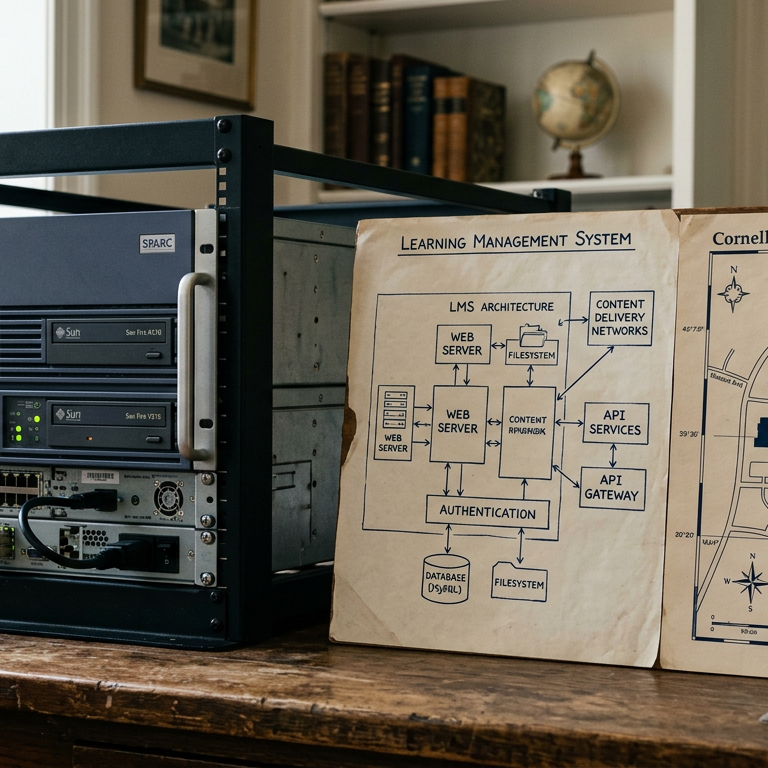
Blackboard architecture: the first whitepaper’s grid
An inside account of the first Blackboard whitepaper, the 1997–2001 choices it set in motion, and how those architecture seams defined the LMS market’s pace.
#blackboard#architecture#edtechApril 4, 2026·15 min read- Operating

Category Definition Is the First Act of Strategy
Most companies inherit a category and then try to win inside it. The more durable move is to define the category itself, then lead the conversation that decides who belongs in it.
#Category Definition#Strategy#PositioningApril 2, 2026·1 min read 
The forgotten birth of the LMS, 1997
What did 1997 really look like when the LMS arrived? Inside Cornell labs, web servers, CourseInfo, and the operational conditions that made courseware a campus service.
#lms#edtech#higher-educationApril 1, 2026·14 min read
AI Won't Replace Teachers; It'll Supercharge Learning (If We Let It)
AI isn't coming for your job in education, it's here to empower a richer, more personalized learning journey. I've seen enough cycles to know this is different.
#AI in education#EdTech#Future of LearningMarch 18, 2026·2 min read- Entrepreneurship

Entrepreneurship Is an Act of Architecture, Not an Act of Will
The mythology around entrepreneurship celebrates grit and conviction. The reality is closer to architecture: the careful, repeated act of designing systems that can carry the weight of an ambition larger than any one person.
#Entrepreneurship#Founders#LeadershipMarch 10, 2026·1 min read - Platform Architecture

Community, Context, Content — The Platform That Supersedes the LMS
Frank Ganis and I argued in 2010 that community theory and social technology were converging into a learning platform that would supersede the traditional LMS. The framework — community, context, content — still holds.
#Community Platform#LMS#Learning ArchitectureFebruary 1, 2010·1 min read - Platform Architecture

Lifelong Learning Is the New Normal — Revisiting the 2010 Whitepaper
In 2010 I argued that continuing education, workforce development, and executive learning were converging into a single platform problem. Fifteen years later, the thesis has hardened into reality.
#Lifelong Learning#Continuing Education#Higher EducationJanuary 1, 2010·1 min read - Platform Architecture

Intelligence Emerges from the Enterprise Education Platform
In 2009 I made the case that the LMS and the SIS/ERP had to merge into a single Enterprise Education Platform — and that real institutional intelligence would only emerge once the data model was unified. Predictive analytics and at-risk dashboards proved the thesis.
#Enterprise Education Platform#LMS#SISSeptember 1, 2009·1 min read - Platform Architecture

"Social Learning" Was a Buzzword. Bandura Was the Real Argument.
In 2009 the industry was selling "social learning" as a feature you could add to an LMS. The whitepaper argued the term had been hollowed out — and that the real work was integrating Bandura's four fundamentals into the platform itself.
#Social Learning#Bandura#Learning ScienceJune 1, 2009·1 min read - Platform Architecture
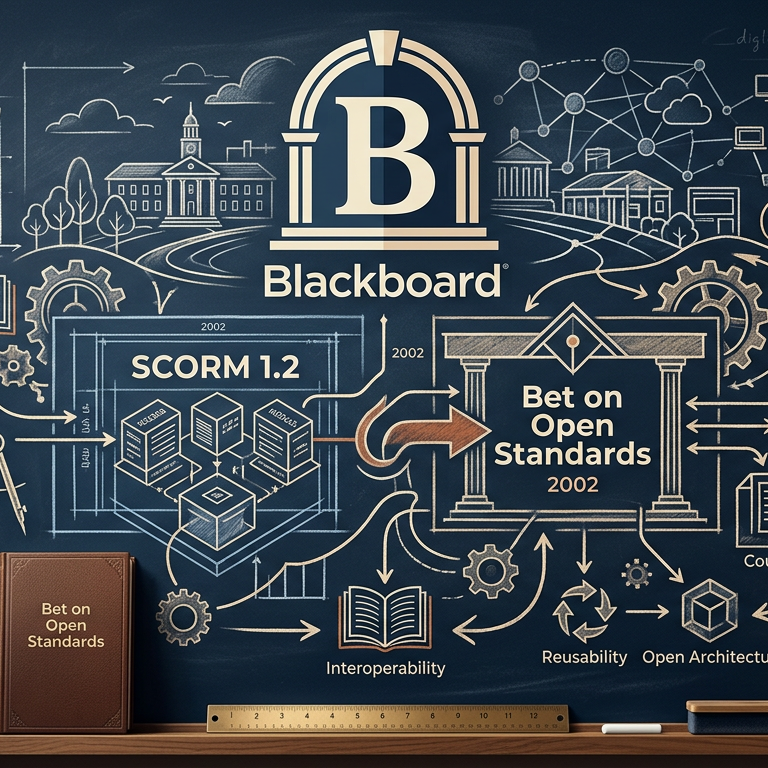
Blackboard, SCORM 1.2, and the Bet on Open Standards (2002)
In 2002 the e-Learning industry was choosing between proprietary lock-in and interoperability. The whitepaper documents how Blackboard adopted IMS, ADL, and SCORM 1.2 within the Learning System, and how Building Blocks let the platform stay aligned to evolving standards.
#SCORM#IMS#ADLSeptember 1, 2002·1 min read - Platform Architecture

Introducing the Blackboard 5 Learning System (2002)
Blackboard 5 (Release 5.6) was the platform that turned course management software into an enterprise category. The 2002 whitepaper documents the architecture, the SIS integration model, and the Building Blocks foundation that powered it.
#Blackboard#LMS#Building BlocksJune 1, 2002·1 min read - Platform Architecture

The Blackboard 2000 Product Strategy — The e-Learning Operating System Thesis
On December 20, 2000 I published the original Blackboard product strategy and roadmap. It outlined release cadence, platform architecture, content management, APIs, open standards, accessibility, and Building Blocks — the e-Learning operating system thesis.
#Blackboard#Product Strategy#Platform ArchitectureDecember 20, 2000·1 min read - Platform Architecture

Building Blocks (B²) — The Architecture That Made Blackboard a Platform
On November 3, 2000, Matthew Pittinsky and I introduced the Building Blocks (B²) Initiative — system services, supported interfaces, and a partner-extensible toolset that turned Blackboard into the academic e-Learning operating system.
#Building Blocks#Blackboard#Platform ArchitectureNovember 3, 2000·1 min read