Field Notes · By Stephen Gilfus · March 18, 2026
AI Won't Replace Teachers; It'll Supercharge Learning (If We Let It)
The future of education isn't about AI replacing human instructors, but about a powerful partnership that transforms how we learn and teach. This industry shift is already upon us.
AI isn't coming for your job in education, it's here to empower a richer, more personalized learning journey. I've seen enough cycles to know this is different.
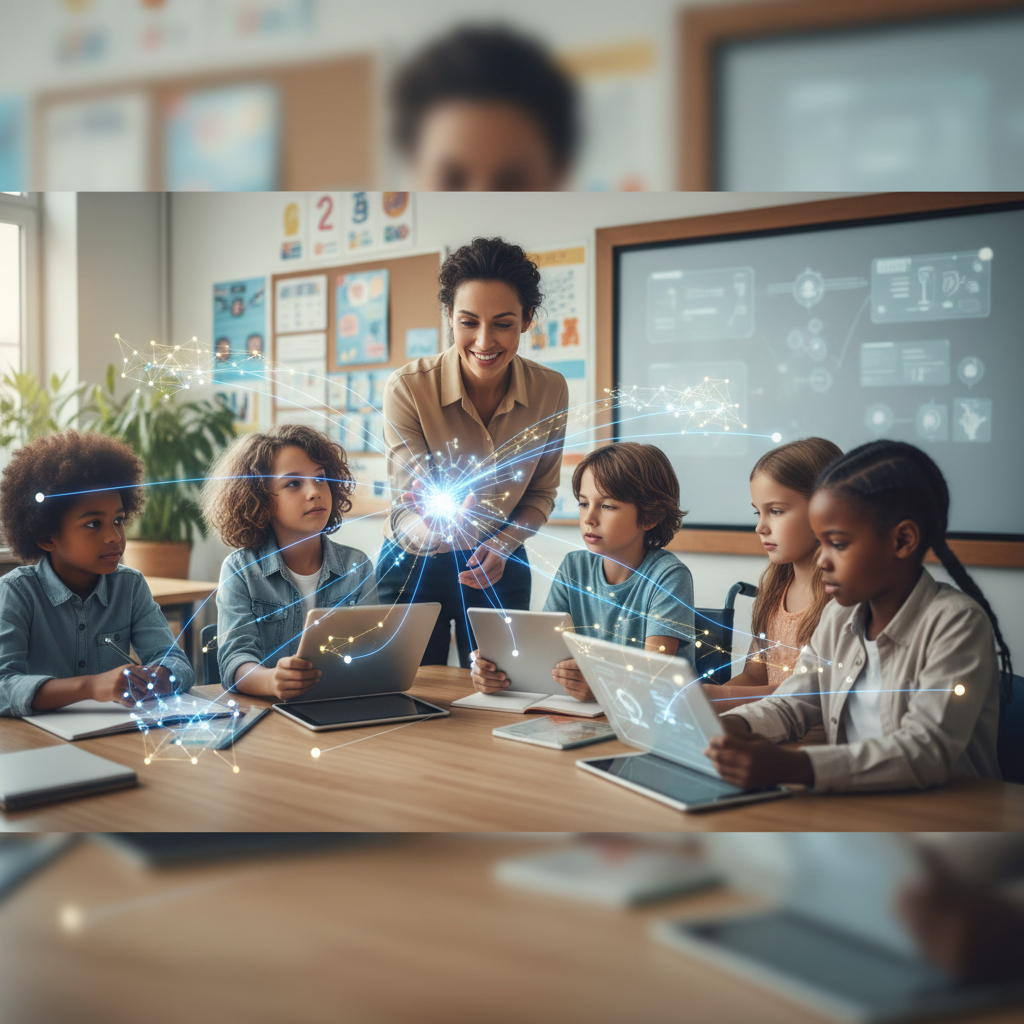
Let's be honest, the conversations around AI in education often start in the wrong place. We hear a lot of doomsday talk, this fear that robots are coming to replace our teachers, that the human element of learning is somehow under siege. Look, I’ve been in this game for over three decades—I’ve seen enough technological waves to know that this isn’t how it works. This isn't about replacing people; it's about giving them superpowers.
When I say AI will superpower learning, I mean it in the most literal sense. Think of the best teachers you know. They connect, they inspire, they understand each student’s unique struggles and triumphs. But even the best teachers are limited by time, by bandwidth, by the sheer number of students in their charge. That’s where AI steps in. It's not a substitute for that human connection, but a force multiplier that allows those teachers to do more of what they love, and do it better.
The Great Unlock: Individualized Learning at Scale
This is the big one. This is the promise we've chased in edtech for as long as I can remember. Back in 1997, when we were building Blackboard, the vision of true individualized learning was almost mythical. We built learning management systems to organize content, facilitate communication, and provide some basic assessments. Revolutionary for its time, absolutely. But tailoring the learning path for *every single student* based on their real-time performance, understanding, and even their emotional state? That was a dream.
Today, **AI in learning** makes that dream a tangible reality. Imagine a student struggling with a particular concept in algebra. Instead of waiting for the next class, or for the teacher to grade their homework and identify the issue, AI can step in immediately. It can analyze their responses, pinpoint the exact misunderstanding, and then serve up a micro-lesson, an alternative explanation, or a different type of practice problem. All in real-time. This isn’t just about making things more efficient; it’s about making learning profoundly more effective.
And it's not just for struggling students. For those who grasp concepts quickly, AI can offer advanced challenges, push them further, and explore related topics they might find engaging. It's about finding that individual learning groove for everyone. This level of personalized instruction, previously only available to a select few with private tutors, can now be scaled to millions. That’s not just a nice-to-have; that’s a fundamental shift in access and equity in education.
Beyond the Classroom: Operational Efficiencies
It’s not just in the instructional moment where AI is going to make waves. Operators, pay attention. The back-office of education is ripe for smart automation. Think about grading. Not the nuanced, essay-based grading that requires human judgment and empathy, but the repetitive, multiple-choice, short-answer assignments that eat up hours of teacher time. AI handles that. Instantly. Accurately. Reliably.
This frees up significant chunks of time for educators. Time they can now spend on creating more engaging lessons, having deeper one-on-one conversations with students, or collaborating with colleagues on curriculum development. Time previously spent on administrative drudgery can now be reinvested into direct human interaction—the very thing AI *can’t* replace.
Then there's student support. AI-powered chatbots can handle a huge volume of common student queries—
Share
Preview LinkedIn copy
For three decades, I've watched the education industry evolve. I've seen massive shifts, tectonic plates grinding, and entirely new categories emerge. But nothing feels quite as profound, as deeply transformative, as the current wave of AI in learning. And frankly, if you're not deeply considering its impact right now, you’re missing the boat.

Let’s be clear: AI isn't coming for your job as a teacher or administrator. That’s a fundamentally flawed way to look at this. What AI *will* do, what it’s already starting to do, is superpower the entire learning process. It’s an accelerant, a force multiplier, an assistant that can handle the sheer volume of data and personalization demands that no human could ever tackle alone.

I remember back at Blackboard, in the late 90s and early 2000s, we always talked about personalized learning. It was the holy grail. We built tools to help, but true, adaptive, real-time personalization at scale felt like science fiction. There were too many variables, too much manual intervention needed. The technology just wasn't equipped for it.

Well, the tech is here now. AI in learning means a student in calculus can get instant, tailored feedback on their specific misconceptions, not just a generic