Field Notes · By Stephen Gilfus · September 1, 2002
Blackboard, SCORM 1.2, and the Bet on Open Standards (2002)
How Blackboard adopted IMS, ADL, and SCORM 1.2 — and why Building Blocks was the architecture that made it sustainable.
In 2002 the e-Learning industry was choosing between proprietary lock-in and interoperability. The whitepaper documents how Blackboard adopted IMS, ADL, and SCORM 1.2 within the Learning System, and how Building Blocks let the platform stay aligned to evolving standards.
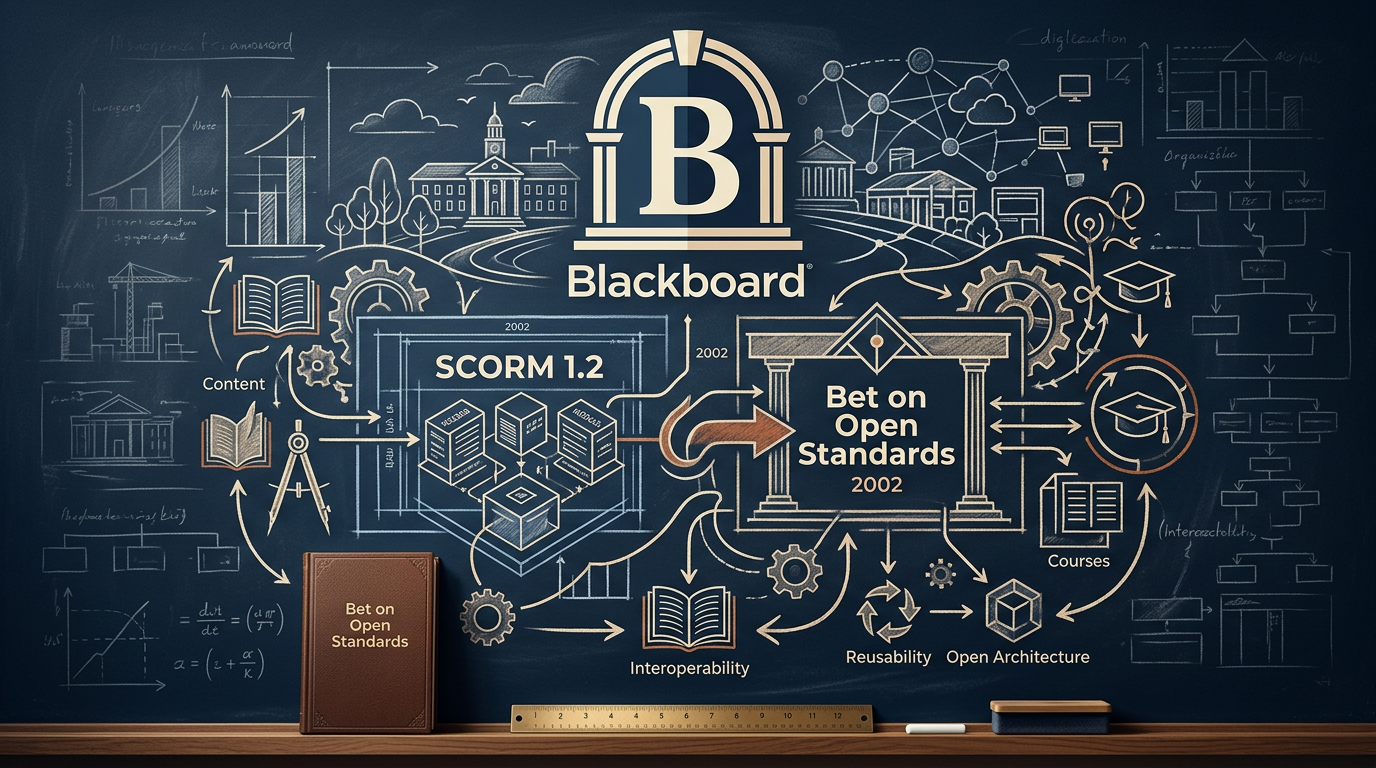
Blackboard Learning System and SCORM 1.2: Adopting Industry Standards was written in 2002 at a moment when the e-Learning industry was making an important architectural choice. Vendors could compete on proprietary content formats and lock customers in, or they could adopt the emerging interoperability standards — IMS, ADL, SCORM — and compete on platform value instead.
The whitepaper documents Blackboard's decision to do the latter. Specifically, it covers:
SCORM 1.2 adoption inside the Learning System, so content authored against the standard could be packaged, imported, and tracked without vendor-specific contortions.
IMS and ADL alignment across content packaging, metadata, and runtime sequencing.
Learning System ML as the variant tuned for content interchange across institutional boundaries.
Building Blocks as the standards-evolution mechanism. This is the most strategically important point in the paper. Standards evolve; platforms have to evolve with them. The B² architecture meant Blackboard could adopt new versions of IMS, ADL, or SCORM without re-platforming the core product. That was the durable bet.
If you're designing any modern interoperability strategy — LTI, xAPI, OneRoster, or the next generation of AI agent protocols — the 2002 architecture decision is still the right reference.
Share